

Branda Buyer Guide / Electric Motorcycle Charging
The connector is one of the most consequential parts of an electric motorcycle charger, yet it is often reduced to a color or a photograph. Two connectors can look related while using different keying, terminal arrangements or mating parts. A disciplined compatibility review separates what is visible from what the battery, vehicle interface and supplier documentation actually confirm.
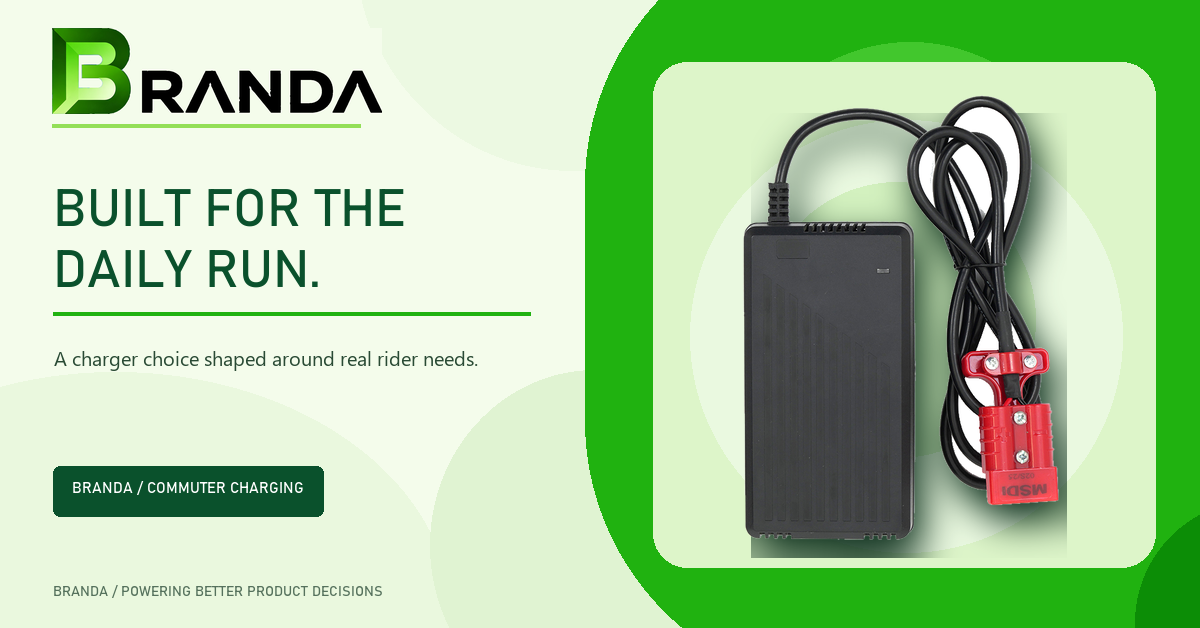
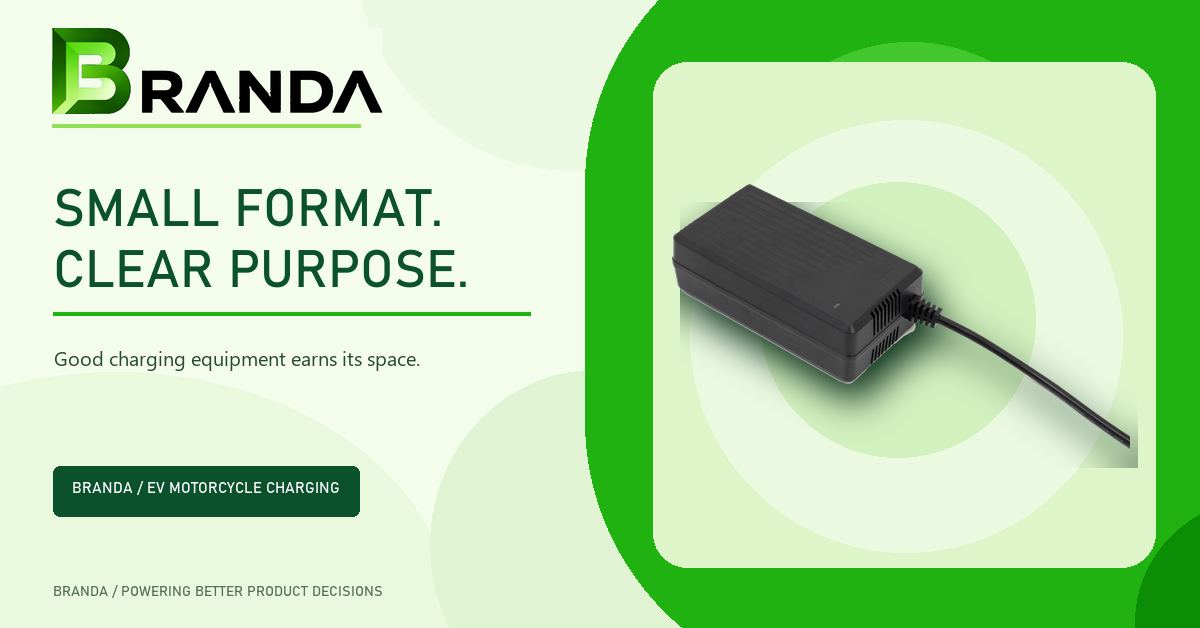
This article uses Branda 323300001 as a reference for connector-led selection. The supplied images show a compact angled housing and a distinct red connector assembly. They help buyers describe the product, but the approval decision still depends on the exact motorcycle interface, approved charging profile and a tested mating connection.
Why the connector should lead the shortlist
The charger housing can be moved, stored or repackaged more easily than an incompatible interface can be corrected. If the connector does not key, latch or align with the motorcycle, every other positive feature becomes secondary. Buyers should therefore make connector compatibility an early gate rather than a final check after commercial terms are agreed.
A useful EV motorcycle charger review connects three documents. The battery specification defines the charging requirement. The motorcycle interface drawing defines the mating part. The charger drawing defines the output connector and cable assembly. If one document is missing, the team should mark the gap instead of filling it with an assumption.
| Decision | Evidence required | Approval owner |
|---|---|---|
| Battery profile | Approved charging limits and BMS information | Battery engineering |
| Motorcycle interface | Mating connector drawing and photo | Vehicle engineering |
| Charger connector | Keying, polarity and terminal layout | Charger engineering |
| Physical handling | Connect and release sample test | Product or quality |
| Build control | Drawing revision and label | Project lead |
What the Branda product reference shows
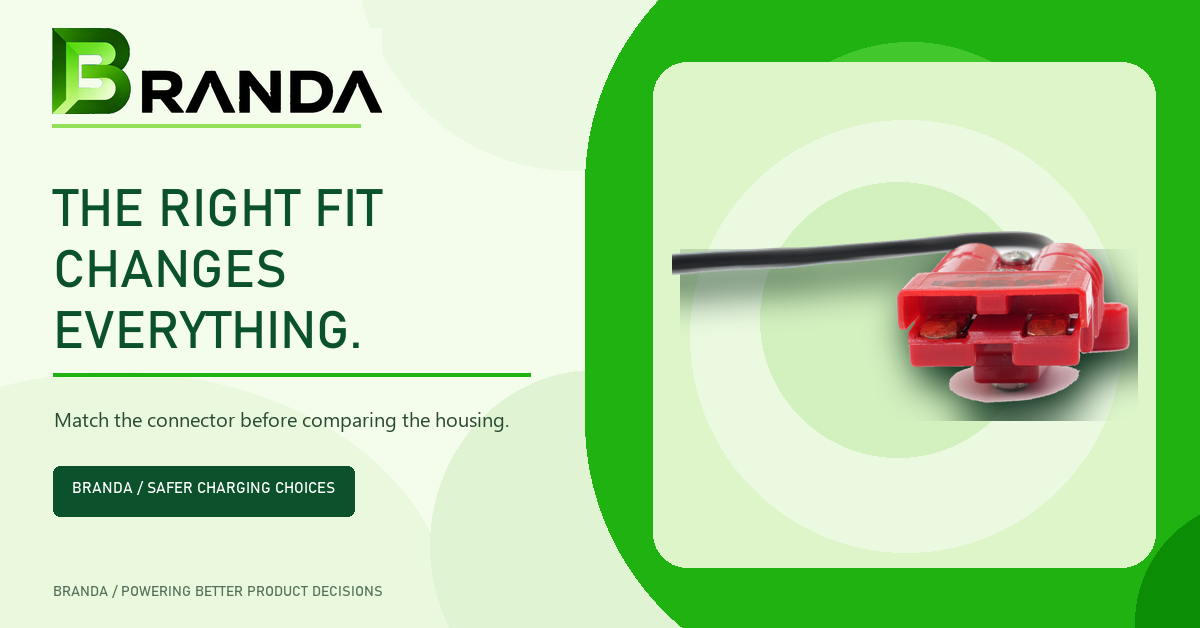
Branda 323300001 combines a compact body with a visible cable loop and a clearly identifiable red connector. The angled housing in the supplied product views suggests a form designed to sit in a practical charging position, while the connector assembly provides a clear grip area for inspection and handling. These observations are about product form, not an unverified claim of compatibility with every electric motorcycle.
The red color is useful for recognition in a workshop or shared charging area. It is not a technical rating. Buyers must still verify polarity, keying, terminal condition and the charging profile. This distinction is central to a professional motorcycle battery charger evaluation.
A compatibility checklist before quotation
Begin by identifying the motorcycle model, battery pack variant and existing charging interface. Then ask whether the charger is intended for a new vehicle program, a replacement market or a specific dealer installation. The answer changes the amount of documentation and testing required.
Battery and BMS review
The charger must follow the approved charging requirement for the battery system. The project team should record temperature-related limits, charging stages and any communication or protection assumptions. Do not treat a connector match as proof that the electrical profile matches.
Mechanical mating review
Check insertion depth, latch release, keying, cable exit direction and the space available for the rider's hand. A connector can technically mate yet still be awkward in the final enclosure. The mechanical review should happen with the motorcycle present or with a verified representation of the mating interface.
| Field | What to document | Why it matters |
|---|---|---|
| Mating part | Part number and revision | Creates one accepted interface |
| Keying | Orientation and unique features | Prevents forced or incorrect mating |
| Terminals | Contact arrangement and condition | Supports engineering review |
| Latch | Release method and access space | Makes repeated handling repeatable |
| Cable direction | Bend and strain path | Reduces awkward routing |
Electrical compatibility is more than a label
Charger selection requires a controlled comparison of input, output and protection requirements. The buyer should not infer those values from housing size or connector color. Request a formal data sheet or controlled drawing for the exact product version, then compare it with the battery and vehicle requirements.
Where communication or handshaking is part of the vehicle system, define that separately. A simple charger and a smart charging system can share a similar-looking enclosure but serve different architectures. The Branda electric bike battery charger selection guide offers a useful project-review framework that can be adapted to electric motorcycle charging solution programs.
| Request field | Buyer input | Supplier response |
|---|---|---|
| Input arrangement | Market, plug and cord requirement | Proposed variant and drawing |
| Output profile | Approved battery charging requirement | Controlled product specification |
| Protection | Vehicle and project assumptions | Documented protection approach |
| Connector | Mating part and interface drawing | Exact charger-side assembly |
| Label | Vehicle, language and traceability needs | Artwork and revision |
Test the connection in the hands of the user
A connector review should include the actual user. Ask a rider or technician to align and insert the connector without coaching. Observe whether the latch is visible, whether the cable pulls the hand away from the intended angle and whether disconnection can be completed deliberately. Record these observations with photos and a sample identifier.
A connection that requires force should be treated as a design question, not a training opportunity. The same applies to a release action that is hidden by the motorcycle bodywork. Add the results to the charger approval file so the approved connector is not later replaced without review.
| Test | Observation | Record |
|---|---|---|
| Alignment | Can the user find the orientation easily? | Photo and note |
| Insertion | Is any force or wiggle required? | Pass, fail or open question |
| Latch | Is the locked position clear? | Visual and tactile result |
| Release | Can it be disconnected without pulling the cable? | Operator feedback |
| Cable | Does the exit direction create strain? |
Route photo |
Connector variants in a B2B charger program
Distributors and OEM teams often want one charger platform to serve several motorcycles. That can be a sound strategy only when the interfaces remain controlled. Each connector variant should have its own drawing, label and compatibility matrix. Packaging should make the difference obvious so a charger for one vehicle family is not connected to another by appearance.
Branda's battery charger manufacturer service and electric vehicle charger product category provide a starting point for those conversations. The more precise the interface and battery request, the more useful the technical response will be.
| Variant | Unique record | Control method |
|---|---|---|
| Connector A | Mating part and keying | Distinct product code |
| Connector B | Alternate interface drawing | Distinct label and packaging |
| Cable length | Approved routing requirement | Drawing revision |
| Market plug | Destination and plug type | Build matrix |
| Label language | Approved artwork | Version-controlled file |
Common connector mistakes
One common mistake is matching a product by photograph instead of by part. Another is assuming that color identifies polarity. A third is allowing a substitute connector during sourcing because it looks similar. These decisions can create a charger that is difficult to connect, difficult to inspect or impossible to trace.
The buyer should also avoid storing connectors loosely with sharp tools or heavy parts. A charger may leave the factory in good condition and still be damaged by daily handling. Label the storage point and make cable coiling part of the routine. This is especially important for a portable electric motorcycle charger that moves between locations.
| Risk | Warning sign | Control |
|---|---|---|
| Wrong mating part | Similar shape, no drawing | Approve part number and revision |
| Forced insertion | User must wiggle connector | Recheck keying and alignment |
| Latch damage | Release feels unclear | Sample inspection and user test |
| Cable strain | Tension at connector exit | Change position or routing |
| Substitution | New part without notice | Change-control requirement |
What to include in the purchasing record
A connector record should be understandable to engineering, quality and after-sales teams. Include the charger product code, connector drawing, mating part, cable direction, label revision and the sample used for the test. Keep photographs alongside the data, because a visual record helps confirm the exact part that was reviewed.
For a replacement or aftermarket program, the compatibility matrix should be conservative. When evidence is incomplete, list the motorcycle variants that remain unconfirmed. This protects the distributor from making a broad claim that the supplied product cannot prove.
| Document | Purpose | Revision control |
|---|---|---|
| Product drawing | Defines housing and cable assembly | Required |
| Connector drawing | Defines interface details | Required |
| Battery approval | Records the charging profile | Required |
| Sample report | Shows what was physically tested | Required |
| Compatibility list | Defines confirmed vehicle variants | Required |
Frequently asked questions
| Question | Answer |
|---|---|
| Does connector color prove polarity? | No. Review the drawing and terminal arrangement. |
| Can I compare connectors by photo? | Photos aid identification, but do not replace the mating part and dimensions. |
| What is the first compatibility gate? | The approved battery and BMS charging requirement. |
| Should the rider use force? | No. A difficult connection should be investigated before approval. |
| Is one connector variant enough for a mixed fleet? | Only after each motorcycle interface and charger profile is confirmed. |
| Why control label revisions? | The label links the physical charger to the approved build. |
| What should a B2B RFQ include? | Battery profile, mating interface, market, use case and forecast. |
Reference framework and next action
For professional review, consult the standards applicable to the destination market. IEC 62196-1 and IEC 62196-2 address conductive charging connector topics, while IEC 61851-1 provides a general conductive charging system framework. Standards references help structure questions; they do not replace product-specific test evidence or certification review.
The best portable scooter and motorcycle charger is not the one with the most familiar-looking plug. It is the one whose battery profile, mating connector and user handling have all been approved. Branda's contact page can connect the project team to the next technical review.
Review the connector before the catalogue shortlist
Share your motorcycle interface, battery information and expected charging routine with Branda. A clear request produces a more useful quotation.
Start a connector reviewProduct images are Branda reference visuals. Electrical compatibility, connector approval, certification, packaging, MOQ and delivery must be confirmed for the exact project. This article is an editorial buying guide, not a substitute for the approved product instructions.


